
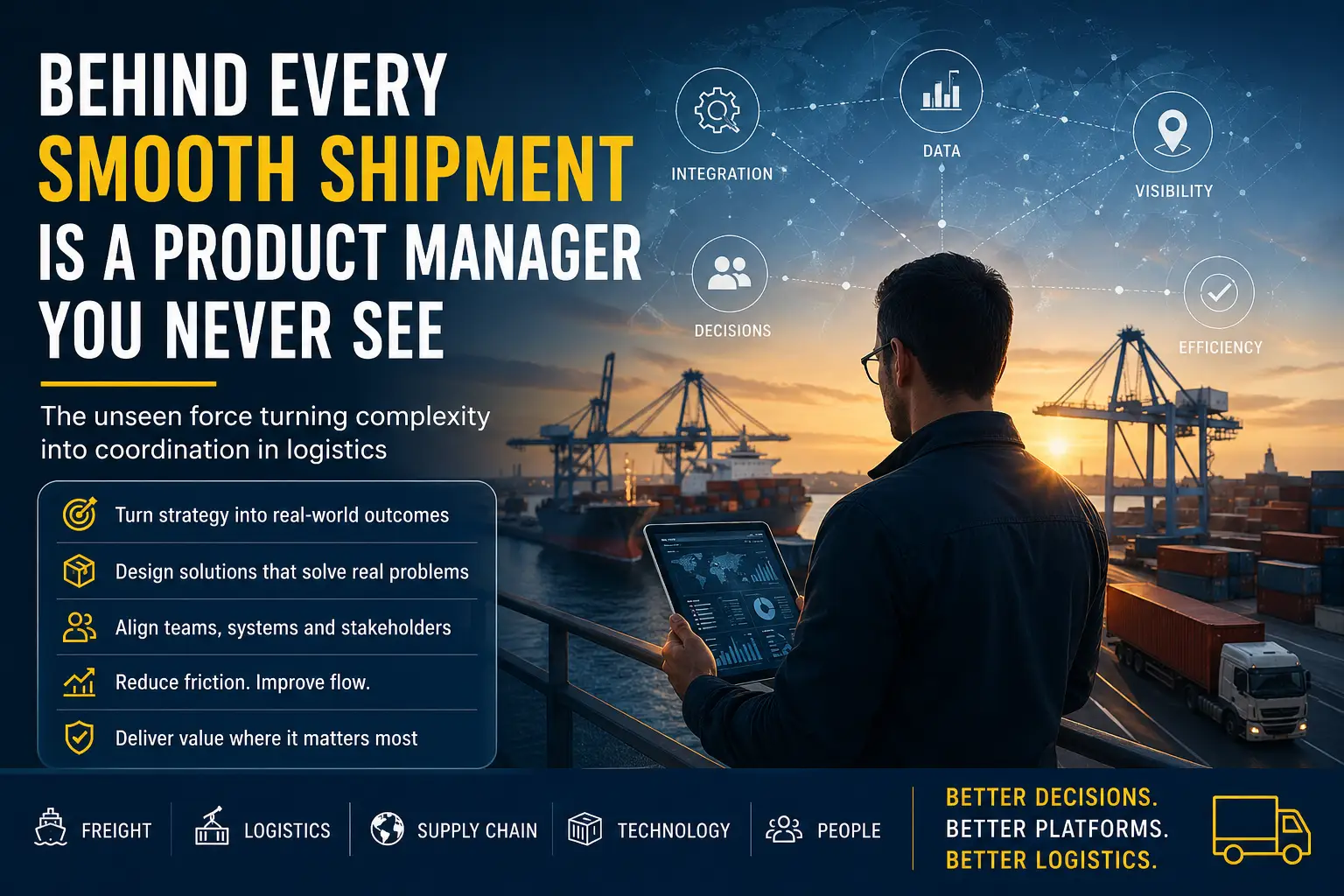
Behind Every Smooth Shipment Is a Product Manager You Never See
In logistics and freight forwarding, a Product Manager is not just building software. They are shaping how physical goods move through the world.
That changes everything.
You are no longer dealing only with screens and features. You are dealing with containers, depots, customs, quarantine, transport coordination, and real operational constraints that do not forgive poor decisions. A missed detail in a system can mean delays, costs, or compliance issues.
A Product Manager in this space must think differently.
They must understand the lifecycle of a container, from booking to delivery.
They must appreciate how fragmented the ecosystem is, with multiple systems, APIs, and manual processes stitched together.
They must design for interoperability, not isolation.
They must balance operational efficiency with regulatory compliance.
In environments like this, product decisions are not theoretical. They directly impact yard operations, turnaround times, and data accuracy across multiple stakeholders.
The strongest Product Managers I have seen in logistics environments do a few things well:
They spend time with operations, not just stakeholders.
They understand how data flows across systems, not just within their own platform.
They simplify workflows that were historically manual or fragmented.
They prioritise reliability and clarity over unnecessary complexity.
In logistics, a “small” improvement can remove hours of manual work or prevent costly errors. That is where real product value is created.
From hands-on experience building container and logistics platforms, the difference is clear. Good Product Managers deliver features. Strong ones improve how the operation actually runs.
That is the standard this industry demands.
#Logistics #FreightForwarding #ProductManagement #SupplyChain #DigitalTransformation #SaaS

